About
Is Home Depot Bamboo Flooring Worth It? Quality, Pricing, and Real Review Breakdown
When planning a home renovation or commercial interior overhaul, floor covering represents one of the largest material investments you will make. Homeowners and contractors frequently flock to large big-box retailers like Home Depot to browse accessible, budget-friendly hard surface options. Among the various solid wood and laminate alternatives, bamboo flooring stands out for its unique aesthetic, rapid environmental renewability, and competitive pricing per square foot.
However, purchasing hard surface materials from a massive retail chain comes with specific trade-offs regarding material density, manufacturing consistency, finish durability, and long-term performance. Evaluating whether these off-the-shelf products are truly worth your investment requires looking closely at product construction types, pricing categories, installer feedback, and common customer complaints.
Understanding the Different Types Sold at Big-Box Stores
Walking down the flooring aisle at a major retail chain reveals that not all products in this category are built the same way. The term itself covers several distinct manufacturing methods, each carrying different durability expectations, moisture tolerances, and price points.
Horizontal and Vertical Traditional Planks
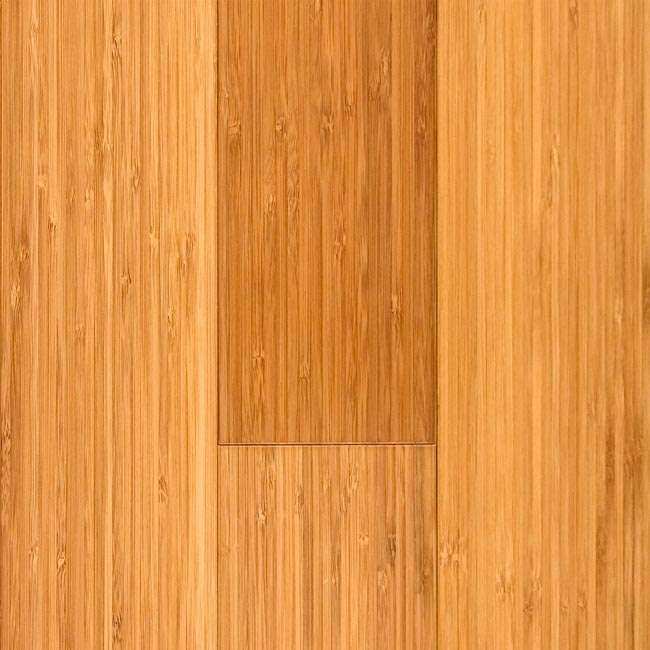
Traditional planks are made by slicing mature stalks into thin rectangular strips. For horizontal planks, these strips are laid flat side-by-side and glued together under heat and pressure, revealing the distinct growth nodes or knuckle patterns of the stalk. For vertical planks, the strips are turned on edge and glued side-by-side, creating a clean, uniform, fine-lined pinstripe appearance.
While traditional horizontal and vertical boards offer an authentic natural look, their physical hardness is comparable to standard red oak or maple. They perform well in low-traffic bedrooms or quiet home offices, but they can dent under heavy furniture legs, high heels, or playful medium-to-large dogs.
Strand-Woven High-Density Planks
Strand-woven options represent a major technological upgrade over traditional horizontal or vertical planks. To manufacture strand-woven boards, raw stalks are shredded into loose, raw fiber strands rather than uniform rectangular strips. These long fibers are saturated with adhesive resin and compressed under hydraulic pressure reaching thousands of tons into dense, solid timber blocks. These compressed blocks are then milled into individual flooring planks.
Strand-woven boards reach a Janka hardness rating well over 3,000 pounds-force, making them significantly harder than oak, hickory, or traditional timber options. Retailers stock strand-woven planks in both solid click-lock profiles and engineered formats suitable for floating or glue-down installations.
Engineered Planks
Engineered planks feature a thin top surface veneer bonded over a multi-ply cross-laminated core made from plywood, HDF, or softer timber layers. The multi-ply construction stabilizes the board against dimensional shifting caused by seasonal humidity changes. This makes engineered options an attractive choice for installations over concrete slab foundations, basement subfloors, or radiant heating systems.
Analyzing the Quality and Construction Standards
Big-box retailers carry several house brands and private-label collections alongside well-known national manufacturers. While these products look identical to high-end boutique specialty brands on the surface, differences often lie in manufacturing tolerances, core density, and surface coatings.
Wear Layer Thickness and Aluminum Oxide Finish
A primary factor in how well a hard surface floor handles daily foot traffic is the quality of its factory finish. Retail products stocked in big-box stores generally feature multi-layer polyurethane factory coatings infused with aluminum oxide particles. Aluminum oxide provides a tough barrier that resists fine scratch marks from dirt, pet claws, and sliding chairs.
However, for engineered options, the thickness of the top real-wood veneer varies significantly by price point. Lower-tier budget lines often feature thin veneers around 1 millimeter to 1.5 millimeters. While this thin layer looks great upon initial installation, it cannot be sanded down or refinished in the future if deep damage occurs. Higher-end collections feature 2 millimeter to 4 millimeter wear layers that allow for future light sanding and refinishing, significantly extending the usable lifespan of the floor.
Milling Precision and Locking Mechanisms
When laying click-lock or tongue-and-groove boards, milling precision is essential. Premium planks fit together snugly without visible gaps, lip height differences, or squeaking joints. Off-the-shelf retail lines, particularly low-cost budget lines, can occasionally suffer from minor milling variations between production batches. Installers working with these materials must take extra care to mix planks from several different boxes simultaneously during installation to ensure smooth color blending and consistent joint lock integrity.
Pricing Categories: Budget vs. Mid-Tier vs. Premium
Pricing at big-box home improvement warehouses is one of the main drivers attracting property owners. Understanding what you get at each price bracket helps align expectations with your renovation budget.
Budget Tier: 1.50 to 2.50 Dollars Per Square Foot
In this entry-level bracket, you typically find thin click-lock traditional horizontal boards or low-thickness engineered options with HDF cores. These floors provide an affordable way to update a low-traffic guest room or rental property on a tight budget. However, board density is moderate, surface finishes are basic, and moisture resistance is limited, requiring careful environmental control in the home.
Mid-Tier: 2.75 to 4.25 Dollars Per Square Foot
This middle tier represents the sweet spot for many residential homeowners shopping at major retailers. In this price range, you find solid strand-woven planks and thicker engineered options with pre-attached underlayment pads. These products feature higher Janka hardness ratings, robust click-locking mechanisms, and richer surface textures that mimic wire-brushed hardwood or hand-scraped timber.
Premium Tier: 4.50 to 6.50 Dollars Per Square Foot
At the top end of retail offerings, premium lines include extra-wide planks, heavy-duty commercial-grade finishes, and thick multi-ply core structures. These products rival specialty flooring showroom options in terms of appearance, featuring rich multi-tonal staining, drop-lock installation systems, and extended residential wear warranties.
Real Review Breakdown: What Customers and Installers Say
Analyzing hundreds of verified buyer reviews and professional contractor feedback reveals clear patterns regarding what users love about retail options—and where common frustrations occur.
The Positives: Unbeatable Value and Easy DIY Installation
DIY enthusiasts frequently praise click-lock strand-woven lines for ease of installation. Planks with pre-attached foam underlayment allow homeowners to install floating floors directly over existing clean subfloors without applying wet glues or driving thousands of nails.
Buyers also consistently highlight the stunning visual appeal of strand-woven finishes. The deep, marbled grain structure and warm color tones create an upscale atmosphere that looks far more expensive than its actual square-foot material cost. In addition, pet owners frequently comment on the scratch resistance of strand-woven boards, noting that energetic dogs leave far fewer surface marks compared to traditional softwoods or pine.
The Negatives: Moisture Sensitivity and Acclimation Errors
The single most common complaint found in negative reviews involves board warping, edge cupping, or gap formation after installation. Almost every instance of this problem traces back to two root causes: improper acclimation or excess subfloor moisture.
Because natural plant fibers absorb ambient atmospheric moisture, planks must acclimate in the sealed room where they will be installed for at least 48 to 72 hours—and sometimes up to a full week for dense strand-woven materials. If an installer skips this step and lays dry boards in a humid room, the planks will absorb moisture, expand, and push against one another, causing the edges to cup upward or joints to pop.
Similarly, installing solid planks directly over damp concrete subfloors in basements without a vapor barrier creates serious moisture traps. Concrete slowly emits ground moisture vapor, which gets absorbed into the bottom of the boards, leading to severe swelling and finish damage over time.
Key Recommendations for a Successful Retail Purchase
If you decide that purchasing off-the-shelf planks fits your project budget and style preferences, following these critical steps ensures a long-lasting, problem-free installation.
Test Subfloor Moisture Content
Before laying a single plank, test your subfloor moisture levels using a calibrated pin or pinless moisture meter. Concrete subfloors should always be sealed with a heavy-duty 6-mil polyethylene vapor barrier when installing floating engineered or click-lock floors. Wood subfloors must be clean, flat, and within 2 to 3 percent moisture content of the acclimated flooring planks.
Do Not Skip the Acclimation Period
Cross-stack unopened or opened boxes in the installation room with climate control operating at normal living temperatures for at least three to five days prior to fitting. This allows the material to reach equilibrium with the home's natural humidity levels, eliminating dramatic expansion or contraction after installation.
Purchase 10 to 15 Percent Extra Material
Always calculate your room square footage and add a 10 to 15 percent waste factor to cover angle cuts, board defects, and future repairs. Buying an extra box or two from the exact same manufacturing lot ensures that if you ever need to replace a damaged plank in five years, you have an exact color and milling match on hand.
Is It Worth It in the End?
For homeowners seeking a visually appealing, ultra-hard, and environmentally friendly floor at an accessible price point, buying mid-to-high-tier strand-woven or engineered options from Home Depot is well worth the investment. As long as you choose dense strand-woven or quality engineered constructions over cheap traditional horizontal planks, follow proper acclimation procedures, and install appropriate vapor barriers, these floors offer outstanding value and long-lasting beauty for modern home interiors.
About Bothbest
Bothbest is a premier factory of bamboo flooring and bamboo decking based in China. With extensive manufacturing expertise, Bothbest delivers high-quality, durable, and eco-friendly bamboo products to global clients, offering reliable solutions for residential, commercial, and outdoor architecture projects.